Feasibility of Nurse-Led Structured Education and Relaxation Techniques as an Add-on to Ayurvedic Management for Psoriasis in an Indian Ayurveda Hospital: A Randomized Controlled Pilot Study
Sindhu Rajesh*1, Dinesh Selvam Subramani1, Prasanth Dharmarajan2, Shivkumar S. Harti2, Raju Ram Parihar³
1Amity College of Nursing, Amity University, Gurugram, Haryana 122413, India
2Department of Swasthavritta, All India Institute of Ayurveda, New Delhi 110076, India
³ Department of Medical Surgical Nursing, Mayurakshi College of Nursing, Jodhpur, Rajasthan- 342304, India
*Corresponding Author's Email: sindhurajesh2012@gmail.com
ABSTRACT
Background: Psoriasis is a chronic immune-mediated inflammatory skin disease with substantial psychological burden. Ayurvedic inpatient management is widely used in India, but no structured nursing protocol has been described. Objectives: To assess the feasibility of a nurse-led structured education and relaxation intervention alongside standard Ayurvedic management and obtain a preliminary estimate of its effect on psoriasis severity. Methods: Two-arm randomized controlled pilot study at a tertiary-level Ayurveda hospital in New Delhi, India. Ten adults with a Psoriasis Area and Severity Index (PASI) of 10 or above were block randomized to experimental or control arms (n = 5 each). Both received standard Ayurvedic treatment; the experimental arm additionally received structured education, supervised relaxation and yoga to Day 14, and caregiver-supported home practice to Day 60. Seven feasibility domains were primary, and PASI was secondary. Results: Of 17 patients screened, 13 were eligible and 10 randomized, giving a consent rate of 76.9% against the pre-specified 80% threshold, the only criterion not met. Retention, session attendance, home practice, protocol fidelity, and acceptability reached 100%, with no attributable adverse events or missing PASI data. Baseline PASI was higher in the control arm (mean 27.28 versus 20.04). Median PASI reduction at Day 60 was 74.6% in the experimental arm versus 17.6% in the control arm; the between-group difference was 10.00 points (95% CI 5.30 to 15.40; exact = 0.008). Conclusion: The protocol was feasible within routine Ayurvedic inpatient care, with consent the one criterion needing change. The PASI difference is a preliminary signal only, given the small sample and baseline imbalance.Keywords: Ayurveda; Feasibility Studies; Nurse-Led Intervention; Psoriasis; Structured Education
INTRODUCTION
Psoriasis is a chronic, immune-mediated inflammatory skin disorder marked by erythematous plaques with silvery scaling. It affects an estimated 100 million people worldwide, with prevalence between 0.09% and 11.4% globally (Michalek et al., 2017) and is the second leading cause of skin- related disability (Mehrmal et al., 2021). Psychological stress has been reported as a trigger or aggravating factor in 37% to 78% of cases (Sarkar et al., 2016), and in an Indian tertiary care sample 62.9% of 70 patients named stress as the main aggravating factor (Vellaisamy et al., 2026). Maladaptive emotion-focused coping fully mediates the relationship between early maladaptive schemas and both quality of life decline and disease severity (Kaynak & Pirim, 2026), which makes coping and stress management legitimate targets for integrated psychological and dermatological interventions.
What has been shown is specific rather than general. Regular support from dermatological nurses improved treatment adherence and reduced severity over the long term in a randomized trial (Svendsen et al., 2022); a combined educational and psychological intervention improved knowledge and quality of life in an Indian setting (Nagarajan & Thappa, 2018); and self- management education reduced severity in severe psoriasis (Ghezeljeh et al., 2018). Online mindfulness-based cognitive therapy improved psoriasis severity, depressive symptoms, quality of life, and itching in a randomized controlled trial of 109 patients (Zhao et al., 2026).
A two-week mindfulness-based intervention improved self-reported mindfulness but did not enhance skin status; notably, the control group showed greater improvement in skin status (Eckardt et al., 2024), and heartfulness meditation combined with methotrexate did not achieve significance on PASI 75 (Nagendran et al., 2026). Patients report unmet education needs (Jankowiak et al., 2004), and 72 patients in a nursing-led psoriasis unit identified stress as the primary perceived trigger and asked for a permanent nursing point of contact (Iborra-Palau et al., 2026). Current multidisciplinary and nursing literature further supports structured education and interventions: telenursing educational protocol for caregivers (Akbari et al., 2025), Psychiatric nursing interventions for quality of life were explored by Amin et al. (2024), and Dymek et al. (2025) evaluated multidisciplinary management integrating exercise, diet, psychological support, and sleep.
What stays uncertain is how nursing care can be configured within the Ayurvedic clinical setting. Ayurveda, an established component of India's AYUSH healthcare system, is increasingly integrated into public healthcare. As a part of workforce upskilling and development, AYUSH- specific skill-development programs have been implemented for nurses and other paramedical professionals (Nesari et al., 2025). Within the Ayurvedic framework, the factors believed significant to psoriasis are inappropriate dietary practices (Viruddhahara) and improper lifestyle habits with irregular routines, while dietary regulation through Pathya and Apathya is regarded as central to treatment (Patil & Kulkarni, 2022). These traditional Ayurvedic notions place substantial emphasis on patients’ adherence to dietary advice, daily routines, and lifestyle practices, creating potential areas for structured nursing support. A standardized nursing protocol could provide a consistent framework for patient education, relaxation and stress management, and strengthening of dietary and lifestyle practices, while also helping to ensure that the intervention is delivered consistently. In this context, evaluating such a structured nursing package through a pilot design is appropriate before undertaking a definitive trial. Pilot and feasibility studies aim to evaluate the delivery of an intervention as intended and to guide the design of future trials, rather than to determine efficacy (Onambele-Pearson et al., 2026; Eldridge et al., 2016). This study therefore tested the feasibility of delivering nurse-led structured education and relaxation techniques as an add-on to Ayurvedic management and obtained a preliminary estimate of the effect on psoriasis severity.
METHODOLOGY
Study Design and Reporting
A two-arm, parallel-group randomized controlled pilot study was conducted (Polit & Beck, 2021). Reporting follows the CONSORT 2010 extension for randomized pilot and feasibility trials (Eldridge et al., 2016), which requires feasibility outcomes as the primary results and clinical outcomes as preliminary; a completed checklist is provided as a supplementary file. One day- numbering scheme is used throughout: Day 0 is the day of baseline assessment, carried out on the day of randomization following admission, with reassessment at Days 14, 30, and 60. Baseline PASI was recorded before the first education session, so the baseline measurement preceded any exposure to the intervention.
Setting and Participants
The study was conducted in the inpatient wards of a tertiary-level Ayurveda hospital in New Delhi, India. Screening and enrollment took place during November 2024, and with 60 days of follow-up per participant, data collection ran to January 2025.
Inclusion Criteria
Adults aged 25 to 55 years with clinically diagnosed psoriasis of at least two years' duration and a PASI of 10 or above at screening, admitted for standard Ayurvedic inpatient management, with a family member willing to act as a caregiver for home practice, able to understand Hindi or English, and willing to give written informed consent.
Exclusion Criteria
Participants with diagnosed psoriatic arthritis, a history of a severe systemic disorder, any condition that prevents the safe performance of relaxation techniques, or an unwillingness to participate in OM chanting were excluded.
Sample Size
Pilot Sample
The sample was not calculated to detect a treatment effect. Ten participants, five per arm, were recruited within a predefined one-month enrollment window in November 2024, set by the investigator's period of access to the ward, and enrollment stopped when that window closed rather than at an efficacy-based target. Published guidance recommends 12 to 35 participants per arm where the aim is to estimate a standard deviation for a subsequent power calculation (Whitehead et al., 2016; Julious, 2005). The present sample falls below that range, so the effect estimates are imprecise, descriptive, and preliminary rather than evidence of efficacy.
Sample Size for Planned Definitive Trial
The sample size for the definitive trial was determined a priori using an F test for repeated-measures analysis of variance within-between interaction in G*Power 3.1 (Faul et al., 2007). Assuming f = 0.20, two-sided α = 0.05, 95% power, two groups, four repeated measurements, correlation of 0.50, and ε = 0.60, the minimum total sample was 80 participants (actual power 95.03%). Allowing 10%, attrition raised this to 88, rounded to 90, and the planned sample was set at 100 participants, 50 per arm. The definitive trial will support the parametric model on which this calculation rests, which the present pilot did not. The small effect size was assumed deliberately rather than the effect observed here, because pilot estimates are unstable and typically larger than those obtained subsequently: the pilot's own responder data would require only 23 participants per arm, so the planned 50 per arm is roughly twice what these data alone indicate. Recruitment feasibility was also assessed: 10 participants were randomized per month at a single site, so 100 would require approximately 10 months here.
Randomization, Allocation Concealment and Blinding
The allocation used block randomization with variable block sizes, which were carried out by the researcher to reduce predictability. Allocation concealment was not implemented, and blinding participants and the delivering nurse was impossible because the intervention was behavioral. PASI was assessed by the researcher, who was not blinded. The resulting bias is carried forward in the discussion.
Intervention
Both arms received standard Ayurvedic management as prescribed by the treating physician, comprising dietary regulation, purification therapy, and a regulated daily routine; this continued unchanged for 60 days in both arms, and adherence to the regimen itself was not separately monitored. The experimental arm additionally received a multicomponent nurse-led intervention delivered by a single nurse researcher holding a postgraduate nursing qualification with 28 years of professional experience, including approximately 10 years in Ayurvedic nursing practice during which relaxation and yoga techniques were routinely used alongside Ayurvedic treatment.
Component 1: Structured Education (Days 1 and 2)
Two face-to-face sessions of approximately 45 minutes were delivered on the two days following baseline assessment, supported by a printed booklet in Hindi and English, covering the disease process; skin hygiene and emollient use; dietary regulation under Pathya and Apathya as prescribed; sleep, rest, and daily routine; graded activity; recognition of flares; and the rationale for relaxation practice.
Component 2: Supervised Relaxation and Yoga (Days 1 to 14)
Supervised sessions of 20 to 30 minutes were conducted daily for 14 days, with two to three techniques introduced per day and then consolidated: OM chanting; chest and abdominal breathing; Sukshma Vyayama, Tadasana, Sukhasana, Paschimottanasana, Suryanamaskara, and Savasana, and Pranayama comprising Nadi Shodhana and Bhramari. Postures were modified or omitted where a participant could not perform them safely.
Component 3: Caregiver-Supported Home Practice (Days 15 to 60)
After discharge, participants continued daily practice at home for 46 days. One nominated family member was trained alongside the participant and supervised the daily session.
Documentation and Fidelity
Two purpose-built instruments documented delivery. The nursing intervention checklist, completed by the nurse researcher for each inpatient day of the supervised phase, contains 38 items in three domains: therapeutic communication (3 items), assessment for signs of infection (8 items), and self-care, hygiene, and lifestyle (27 items, covering bathing and emollient practice, clothing and bed linen, avoidance of scratching and irritants, sleep regulation, compliance with Pathya and Apathya, yoga and exercise, and adherence to treatment), plus a six-item discharge section recording the caregiver handover. A participant was counted as having received the intervention as written when every applicable item was recorded as completed on each supervised day and all six discharge items were done. The caregiver checklist, completed by the nominated family member for each day of home practice, contains 46 items mirroring the same three domains, with 35 in the self-care domain. Each item was marked, completed or not completed for every day on a dated grid, and the sheets and diary notes were returned and cross-checked at each follow-up visit; this checklist is the source of the home practice adherence data below.
Outcomes
Feasibility was the primary outcome, assessed across seven pre-specified domains with progression criteria set before recruitment (Table 1). Acceptability was recorded on Day 14 by the delivering nurse using a structured rating of 12 items on a five-point Likert scale; a participant was counted as rating the intervention acceptable when the total score fell between 48 and 60. Psoriasis severity was the secondary outcome, measured using the Psoriasis Area and Severity Index (PASI), which combines erythema, induration, and desquamation with body surface area affected across four regions to give a score from 0 to 72 (Fredriksson & Pettersson, 1978), recorded at Days 0, 14, 30,
and 60.
Statistical Analysis
Analysis was performed in IBM SPSS Statistics version 27. Given five participants per arm, the analysis was exact and non-parametric throughout; no test of normality was attempted, because such tests have negligible power at this sample size. Mean and standard deviation are reported alongside the median and interquartile range for description only and carry no distributional assumption. Categorical baseline variables were compared using Fisher's exact test, the chi-square test being unusable because every expected cell frequency was below five. Baseline PASI was examined descriptively, since the pilot was not powered to establish equivalence, and no baseline- adjusted model was fitted. No observation was missing, so no imputation was required.
The comparison of interest was changed from baseline rather than the score at each visit, because comparing change directly addresses whether trajectories differed between arms. Change scores at Days 14, 30, and 60 were compared using the exact Mann–Whitney U test, with the Hodges– Lehmann median difference and its exact 95% confidence interval as the effect estimate, alongside the rank-biserial correlation. Responder analysis reports participants achieving a 50%, 75%, and 90% reduction in PASI from baseline, compared using Fisher's exact test. Because one control participant had erythrodermic psoriasis and a markedly higher baseline PASI of 46.9, a sensitivity analysis repeated the Day 60 comparison with that participant excluded. No adjustment was made for multiple comparisons; with three between-group comparisons, a Bonferroni-adjusted threshold would be p<0.017. All p-values are exploratory and are presented as descriptive summaries rather than tests of a pre-specified hypothesis (Lancaster & Thabane, 2019).
Table 1: Pre-Specified Feasibility Domains, Measures and Progression Criteria
Domain
Measure
Progression Criterion
Consent
Eligible patients consenting to enrol
≥ 80%
Retention
Participants completing the Day 60 assessment
≥ 80%
Session Attendance
Structured education and supervised relaxation sessions attended
≥ 80% of scheduled sessions
Home Practice Adherence
Prescribed home practice days recorded on the caregiver checklist
≥ 70% of prescribed days
Acceptability
Participants rating the intervention acceptable on the Day 14 rating
≥ 80%
Protocol Fidelity
Participants receiving the intervention as written in the protocol
≥ 80%
Safety
Adverse events attributable to the intervention
No serious attributable event
Thresholds were set before recruitment. Consent, retention and safety apply to all randomised participants; the remaining domains apply to the experimental arm only, since the control arm received no intervention.
Ethical Consideration
The research obtained ethical clearance from Institutional Ethics Committee, All India Institute of Ayurveda, New Delhi, India with Reference Number IEC-333/27.06.2024/PhD (E)-34/2023 (Re- issue) on 28th September 2024.
RESULTS
Feasibility Outcomes
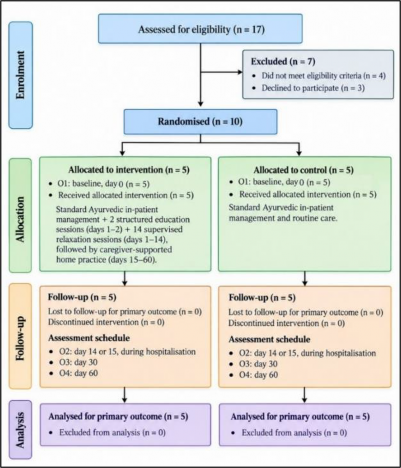
Screening and randomization numbers are shown in Figure 1. Session, adherence, acceptability and fidelity indicators apply to the experimental arm (n = 5).
Figure 1: CONSORT Flow of Participants through Pilot Trial
Figure 1 shows the flow of participants. 17 patients were screened, 13 were eligible, and 10 were randomized, a recruitment rate of 10 participants per month, and a consent rate of 76.9%. Consent was the one criterion that fell below its threshold, by 3.1 percentage points; the three who declined
each stated a general lack of interest rather than an objection to any element of the protocol. Every other criterion was met, with 100% retention, full attendance at all 10 education and all 70 supervised relaxation sessions, all 230 prescribed home practice days recorded, the protocol delivered as written and rated acceptable by all five experimental participants, no attributable adverse event, and complete PASI data at all four visits (Table 2). The observed recruitment rate would support the planned 100 participants in approximately 10 months at this site.
Table 2: Feasibility Outcomes of the Pilot Study
Feasibility Indicator
Result
Criterion Met
Consent rate among eligible patients
10/13 (76.9%)
No (threshold 80%)
Retention to Day 60
10/10 (100%)
Yes
Structured education sessions attended
10/10 (100%)
Yes
Supervised relaxation sessions attended
70/70 (100%)
Yes
Home practice days recorded
230/230 (100%)
Yes
Intervention rated acceptable
5/5 (100%)
Yes
Protocol delivered as written
5/5 (100%)
Yes
Adverse events attributable to intervention
0/10 (0%)
Yes
PASI observations complete
40/40 (100%)
Yes
Baseline Characteristics
Table 3: Baseline Demographic and Clinical Profile of Two Arms
Variable
Category
Experimental (n = 5)
Control (n = 5)
Fisher's Exact p
Age (Years)
25–35
3
3
1.000
36–45
1
1
46–55
1
1
Sex
Male
4
3
1.000
Female
1
2
Education
Up to secondary
2
2
1.000
Graduate or above
3
3
Socioeconomic Status
Middle
4
4
1.000
Lower
1
1
Psoriasis Type
Plaque
4
4
1.000
Erythrodermic
1
1
Disease Duration (Years)
2–5
1
2
0.520
6–10
2
3
11–15
0
0
> 15
2
0
Prior Treatment
Allopathy only
2
2
1.000
Both systems
3
3
Baseline PASI
Median (range)
20.70 (14.2–25.1)
23.10 (19.1–46.9)
—
Counts are numbers of participants. Fisher's exact p is reported once per variable and describes the observed distribution; it is not evidence of baseline comparability. Baseline PASI was compared descriptively and not tested.
Table 3 shows the baseline profile. Most participants were male, aged 25 to 35 years, of middle socioeconomic status, and had plaque psoriasis; one participant in each arm had erythrodermic psoriasis. Fisher's exact test produced no p-value below 0.520 for any variable. This describes the observed distribution and is not evidence of comparability: with five participants per arm, the test has almost no power to detect imbalance, so baseline characteristics were interpreted descriptively. Baseline PASI was higher in the control arm, with a median of 23.10 (range 19.1 to 46.9) against 20.70 (range 14.2 to 25.1).
Psoriasis Severity
Table 4: PASI Scores across Time Points in Experimental and Control Arms (N = 10)
Time Point
Arm
Mean ± SD
Median (IQR)
Range
Day 0
Experimental
20.04 ± 4.06
20.70 (18.40–21.80)
14.2–25.1
Control
27.28 ± 11.23
23.10 (21.60–25.70)
19.1–46.9
Day 14
Experimental
11.14 ± 3.79
9.80 (9.60–13.60)
6.5–16.2
Control
23.40 ± 8.67
19.40 (18.50–23.30)
17.4–38.4
Day 30
Experimental
7.88 ± 3.61
5.60 (5.60–11.40)
4.6–12.2
Control
22.52 ± 8.27
18.50 (18.20–23.40)
16.0–36.5
Day 60
Experimental
5.00 ± 2.59
3.60 (3.60–7.30)
2.3–8.2
Control
22.44 ± 8.49
18.20 (17.80–21.20)
17.6–37.4
Mean ± SD is reported for description only and carries no distributional assumption; the median and interquartile range (IQR) are the primary summaries. PASI = Psoriasis Area and Severity Index.
Table 4 shows PASI at each time point. Baseline severity was higher in the control arm on the mean (27.28 ± 11.23 versus 20.04 ± 4.06, a difference of 7.24 points) but much closer on the median (2.40 points). The gap between the two summaries is explained by the single control participant with erythrodermic psoriasis and a baseline PASI of 46.9; excluding that participant, the control baseline mean was 22.38 ± 2.76. This discrepancy was treated as a material imbalance rather than chance variation and taken into account in interpreting the findings that follow.
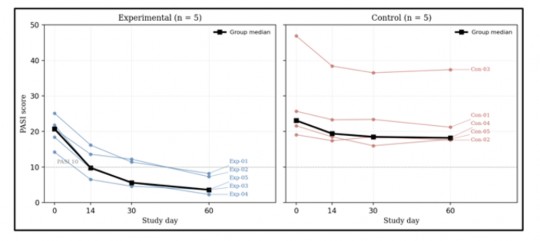
Figure 2: Individual PASI Trajectories with Group Median Overlaid by Arm
Figure 2 shows the PASI trajectory of every participant with the group median overlaid, shown in preference to group means with error bars because, at five per arm, a mean with an error bar conceals more than it conveys. Every experimental participant declined steadily across the four visits without crossing. In the control arm, all five declined between Day 0 and Day 14 and then changed little.
Table 5: Change in PASI from Baseline and Between-Arm Comparison
Time Point
Experimental Median Change (IQR)
Control Median Change (IQR)
Hodges–Lehmann Difference (95% CI)
Exact p
r
Day 14
8.80 (7.70–8.90)
3.10 (2.40–3.70)
5.30 (0.30 to 8.90)
0.032
0.84
Day 30
12.80 (9.60–13.70)
4.90 (2.30–5.60)
7.90 (2.10 to 12.60)
0.032
0.84
Day 60
14.80 (13.40–16.90)
4.50 (3.80–4.90)
10.00 (5.30 to 15.40)
0.008
1.00
Change is reduction from baseline in PASI points, compared using the exact Mann–Whitney U test. r = rank-biserial correlation. No multiplicity adjustment was applied; the Bonferroni-adjusted threshold would be p < 0.017. CI = confidence interval; IQR = interquartile range.
Table 5 shows that the median reduction in PASI increased progressively in both arms but was consistently greater in the experimental arm: 8.80 against 3.10 points at Day 14 (Hodges–Lehmann difference 5.30; exact p=0.032), 12.80 against 4.90 at Day 30 (difference 7.90; exact p=0.032), and
14.80 against 4.50 at Day 60 (difference 10.00; 95% CI 5.30 to 15.40; exact p=0.008; rank-biserial r=1.00, indicating complete separation of ranks). Applying the Bonferroni-adjusted threshold of p<0.017, only the Day 60 comparison meets it. In the pre-specified sensitivity analysis excluding the control participant with erythrodermic psoriasis, the Day 60 difference remained in the same direction and of similar magnitude (Hodges–Lehmann difference 11.45 points; exact p=0.016), so it was not produced by that single outlying baseline value alone.
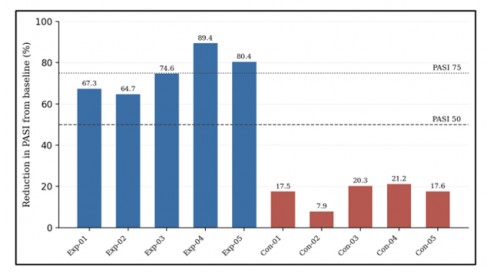
Figure 3: Percentage Reduction in PASI at Day 60 for Each Participant, against the PASI 50 and PASI 75 Thresholds
Expressed as percentage reduction from each participant's own baseline, the median at Day 60 was 74.6% in the experimental arm and 17.6% in the control arm, a Hodges–Lehmann difference of 57.1 percentage points (95% CI 46.1 to 71.9; exact p=0.008). Figure 3 shows the percentage reduction for each participant against the PASI 50 and PASI 75 thresholds. All five experimental participants achieved at least a 50% reduction and two at least 75%; no control participant achieved 50%, and none reached 90%. The PASI 50 comparison gave exact p=0.008, and the PASI 75 comparison p=0.444, the latter to be read cautiously given the very small sample.
DISCUSSION
Feasibility and Consent Shortfall
The protocol was delivered as designed. All ten participants completed 60 days of follow-up, every session was attended, every prescribed home practice day was recorded, and no adverse event was attributable to the intervention. Complete PASI data from all four visits indicate that repeated severity assessment is workable within routine care here. Six of seven progression criteria were met, so the protocol can proceed to a definitive trial with amendment rather than redesign (Eldridge et al., 2016).
Consent was the criterion that fell short, and the shortfall lies in willingness to take part rather than patient flow: ten participants were randomized in a single month at one center, so recruiting 100 is operationally feasible in approximately 10 months. The shortfall was due to three refusals out of 13, and obtaining one additional consent would have raised the figure above the 80% threshold; therefore, the consent process needs strengthening rather than the trial being judged unviable. All three refusals were recorded as a general lack of interest, which was too non-specific to act on, so the definitive trial should capture refusal reasons in structured form at screening, distinguishing the burden of daily home practice, the length of follow-up, the additional visits, and reluctance to be randomized. A recent nurse-led education pilot protocol set its threshold at session attendance rather than consent (Gentizon et al., 2026); specifying both makes the weaker link visible.
Severity Findings
The reduction in PASI in the experimental arm was large: median individual severity fell by 74.6% over 60 days; all five participants crossed PASI 50, and two crossed PASI 75. PASI 50 is an established marker of clinically meaningful improvement, and PASI 75 is the benchmark used in systemic therapy trials (Mrowietz et al., 2011; Carlin et al., 2004). A reduction of this size accompanying a behavioral adjunct is worth pursuing in a properly powered trial. It does not provide sufficient evidence of effectiveness: five participants per arm cannot support such a claim, the confidence intervals are wide, and the arms differed at baseline.
The arms differed at baseline by 7.24 PASI points on the mean, and a non-significant result at five per arm does not establish comparability, so the imbalance is treated as real. Two features moderate its influence: the median difference was smaller, at 2.40 points, and the mean difference was driven largely by one control participant with erythrodermic psoriasis, whose exclusion left the Day 60 difference in the same direction and of similar magnitude. The primary analysis used change from baseline rather than absolute score, which reduces but does not remove the influence of differing starting values. The imbalance nevertheless remains an alternative explanation for part of the difference, and the definitive trial must be designed to remove it.
The control arm also improved, and three explanations cannot be separated here. Control participants received standard Ayurvedic inpatient management throughout, so any effect attributed to the nursing package is an effect over and above active treatment. Regression to the mean is likely to operate, since participants were enrolled at admission, a period of high disease activity, and a group selected on a high baseline value tends to show a lower value at re-measurement irrespective of intervention (Barnett et al., 2005); this applies more strongly to the control arm, which had the higher baseline. Psoriasis also follows a relapsing and remitting course, so part of the change in both arms may reflect natural history.
Two pathways plausibly link the intervention to the observed change. The first is stress reduction: stress is associated with onset, relapse, and severity (Sarkar et al., 2016); maladaptive coping mediates the link between psychological vulnerability and severity (Kaynak & Pirim, 2026); and paced breathing, pranayama, and OM chanting reduce sympathetic arousal. The second is adherence: Ayurvedic management depends on the patient following dietary rules and a daily routine after discharge; adherence scales with outcome in psoriasis (Bewley et al., 2026), and structured education with caregiver involvement is a recognized means of improving it (Svendsen et al., 2022). On this account, the nursing package raises the proportion of the regimen actually delivered rather than acting directly on the skin. Because this is a multicomponent intervention delivered as a single package, the design cannot distinguish the pathways or separate education from relaxation; a factorial design would be needed.
Relation to Previous Studies
The direction of these findings is consistent with earlier nurse-led work (Svendsen et al., 2022; Nagarajan & Thappa, 2018), while evidence for relaxation-based adjuncts is more mixed, and the present result sits at the optimistic end of it (Zhao et al., 2026; Nagendran et al., 2026). The larger magnitude here should not be read as evidence of a stronger intervention: participants were inpatients receiving intensive Ayurvedic therapy concurrently, entered at high disease activity, received daily supervised practice rather than periodic contact, and were very few, and pilot estimates are commonly larger than those obtained subsequently. The study also differs in setting: it was conducted in an Ayurveda hospital, a context situated within India’s broader integration of AYUSH into the healthcare system (Nesari et al., 2025), and its practical contribution is the demonstration that a modern-system nursing protocol can be delivered inside an Ayurvedic care pathway without conflict. Pathya, Apathya, and Viruddhahara are reported because they describe the dietary and lifestyle content actually delivered, not as biomedical mechanisms; the dietary pattern and psoriasis risk are not yet firmly linked in prospective cohort data (Menezes-Júnior et al., 2026), which is a further reason to treat that component as content rather than a mechanism.
Limitations
The sample of ten is far below the range recommended for pilot trials, so every effect estimate is imprecise, and the arms were not balanced at baseline. Allocation concealment and assessor blinding were absent, leaving selection and detection bias unaddressed for the observational components of PASI, and delivery by one nurse at one center limits transferability. Adherence and acceptability rest on records made by participants and caregivers and on a rating administered by the delivery nurse. Adherence to the Ayurvedic regimen was not monitored, and PASI is less reliable in erythrodermic than in plaque disease.
Future Scope
The definitive trial is planned with 100 participants, 50 per arm, with randomization stratified or minimized on baseline PASI severity category and psoriasis type, concealed allocation, and PASI scored by an independent blinded assessor. The outcome set should broaden beyond PASI to quality of life, a validated measure of psychological distress, a validated self-management efficacy measure, objective adherence monitoring, and a cost analysis. Follow-up should extend to at least six months to capture relapse, a factorial design would separate the education and relaxation components, and multi-center recruitment would test whether the protocol transfers between institutions.
CONCLUSION
A nurse-led package of structured education and relaxation techniques could be delivered alongside standard Ayurvedic inpatient management for psoriasis. Retention, session attendance, home practice, fidelity, acceptability, and safety all met their pre-specified criteria, and outcome data were complete at every assessment point. Consent among eligible patients was the single criterion not met, falling 3.1 percentage points short of the 80% threshold, and strengthening the consent process is the one amendment the protocol requires. The severity findings are preliminary, and a larger, adequately powered definitive trial is needed before any claim of effectiveness can be made. For nursing practice, the study shows that nurses trained in the modern system can deliver a structured self-care and relaxation protocol inside an Ayurvedic care pathway without conflict with the prescribed regimen, which supports developing the protocol into a standardized training package for nursing staff in Ayurveda hospitals.
CRediT Authorship Contribution Statement
S.R.: Conceptualization, Investigation, Methodology, Project administration, Resources, Validation, Writing – original draft, Writing – review and editing. D.S.S.: Methodology, Supervision, Validation, Writing – review and editing. P.D.: Methodology, Supervision, Validation, Writing – review and editing. S.S.H.: Methodology, Supervision, Validation, Writing – review and editing. R.R.P.: Data curation, Formal analysis, Visualization, Writing – review and editing.AI Assistance Declaration
Language editing and drafting assistance was carried out with the help of Artificial Intelligence (AI) technology ChatGPT (OpenAI, GPT-4). The tool was used only for language enhancement and grammar correction; no content, data, analysis, or references were generated by it. The authors reviewed and revised the content thoroughly, approved the final manuscript, and took full responsibility for it.
Conflict of Interest
The authors declare no competing interests in relation to this work.
ACKNOWLEDGEMENT
The authors acknowledge the support and cooperation of All India Institute of Ayurveda, New Delhi, India. The contribution of the subject experts who guided preparation of the nursing guideline is appreciated, as is the participation of all patients and their caregivers.
REFERENCES
Akbari, A., Matourypour, P., & Zakerimoghadam, M. (2025). Telenursing in care education for caregivers of psoriasis patients: A protocol for a randomized controlled trial. Discover Mental Health, 5(1), 189. https://doi.org/10.1007/s44192-025-00324-0
Amin, R. A. H., Sayied, N. E., Mohamed, H. S., & Badran, A. Y. (2024). Effect of psychiatric nursing interventions on quality of life for patients with psoriasis. Pakistan Journal of Life and Social Sciences (PJLSS), 22(2), 539-549. https://doi.org/10.57239/PJLSS-2024-22.2.0039
Barnett, A. G., van der Pols, J. C., & Dobson, A. J. (2005). Regression to the mean: What it is and how to deal with it. International Journal of Epidemiology, 34(1), 215–220. https://doi.org/10.1093/ije/dyh299
Bewley, A., Pinter, A., López Estebaranz, J. L., Galván, J., Sapena, V., & Koscielny, V. (2026). Adherence to CAL/BDP PAD-cream influences treatment effectiveness and preference in scalp psoriasis under real-life conditions: Results from the prospective, multicenter, observational PRO- SCALP study. Dermatology and Therapy, 16(9), 4683–4703. https://doi.org/10.1007/s13555-026- 01884-x
Carlin, C. S., Feldman, S. R., Krueger, J. G., Menter, A., & Krueger, G. G. (2004). A 50% reduction in the Psoriasis Area and Severity Index (PASI 50) is a clinically significant endpoint in the assessment of psoriasis. Journal of the American Academy of Dermatology, 50(6), 859–866. https://doi.org/10.1016/j.jaad.2003.09.014
Dymek, A., Czerwonogrodzka-Senczyna, A., Wyszyńska, J., Wójcik, M., Tarkowski, B., Zalewska-Janowska, A., & Łuszczki, E. (2025). Multidisciplinary management of psoriasis: Integrating diet, exercise, psychological support, and sleep interventions. Clinical, Cosmetic and Investigational Dermatology, 18, 2951–2970. https://doi.org/10.2147/CCID.S543289
Eckardt, M., Stadtmueller, L., Zick, C., Kupfer, J., & Schut, C. (2024). Effects of a brief mindfulness-based intervention in patients with psoriasis: A randomized controlled trial. Acta Dermato-Venereologica, 104, adv18277. https://doi.org/10.2340/actadv.v104.18277
Eldridge, S. M., Chan, C. L., Campbell, M. J., Bond, C. M., Hopewell, S., Thabane, L., & Lancaster, G. A. (2016). CONSORT 2010 statement: Extension to randomised pilot and feasibility trials. BMJ, 355, i5239. https://doi.org/10.1136/bmj.i5239
Faul, F., Erdfelder, E., Lang, A.-G., & Buchner, A. (2007). G*Power 3: A flexible statistical power analysis program for the social, behavioral, and biomedical sciences. Behavior Research Methods, 39(2), 175–191. https://doi.org/10.3758/BF03193146
Fredriksson, T., & Pettersson, U. (1978). Severe psoriasis – Oral therapy with a new retinoid. Dermatologica, 157(4), 238–244. https://doi.org/10.1159/000250839
Gentizon, J., Konrad, M., Saini, C., Stefanelli, A., & Probst, S. (2026). Feasibility and preliminary effectiveness of a nurse-led therapeutic patient education program in patients living with chronic psoriasis: A pilot study protocol. Journal of the Dermatology Nurses’ Association, 18(1), 12–21. https://doi.org/10.1097/JDN.0000000000000858
Ghezeljeh, T. N., Soltandehghan, K., & Hoseini, A. F. (2018). The effect of self-management education on the quality of life and severity of the disease in patients with severe psoriasis: A non- randomized clinical trial. Nursing Practice Today, 5(1), 243–255. https://npt.tums.ac.ir/index.php/npt/article/view/307
Iborra-Palau, E. V., García-Redondo, E., Blasco-García, C., & Alabau-Dasi, R. (2026). Lived experiences, disease management and expectations in a nursing-led psoriasis unit: A qualitative study. Healthcare, 14(12), 1647. https://doi.org/10.3390/healthcare14121647
Jankowiak, B., Krajewska-Kułak, E., Van Damme-Ostapowicz, K., Wrońska, I., Lukaszuk, C., Niczyporuk, W., & Baranowska, A. (2004). The need for health education among patients with psoriasis. Dermatology Nursing, 16(5), 439–444. https://pubmed.ncbi.nlm.nih.gov/15624709/
Julious, S. A. (2005). Sample size of 12 per group rule of thumb for a pilot study. Pharmaceutical Statistics, 4(4), 287–291. https://doi.org/10.1002/pst.185
Kaynak, A., & Pirim D. B. (2026). Early maladaptive schemas, emotion regulation, coping with stress, quality of life, and psychological symptoms in psoriasis disease. Journal of Health Psychology, 31(10), 4143–4160. https://doi.org/10.1177/13591053251412098
Lancaster, G. A., & Thabane, L. (2019). Guidelines for reporting non-randomised pilot and feasibility studies. Pilot and Feasibility Studies, 5, 114, https://doi.org/10.1186/s40814-019-0499- 1
Mehrmal, S., Uppal, P., Nedley, N., Giesey, R. L., & Delost, G. R. (2021). The global, regional, and national burden of psoriasis in 195 countries and territories, 1990 to 2017: A systematic analysis from the Global Burden of Disease Study 2017. Journal of the American Academy of Dermatology, 84(1), 46–52. https://doi.org/10.1016/j.jaad.2020.04.139
Menezes-Júnior, L., Martinez-Gonzalez, M. A., Bullón-Vela, V., González-Cantero, Á., Martin- Gorgojo, A., & Bes-Rastrollo, M. (2026). Long-term adherence to the mediterranean diet and risk of rheumatoid arthritis and psoriasis: 20-year follow-up of the SUN project. The American Journal of Clinical Nutrition, 101511. https://doi.org/10.1016/j.ajcnut.2026.101511
Michalek, I. M., Loring, B., & John, S. M. (2017). A systematic review of worldwide epidemiology of psoriasis. Journal of the European Academy of Dermatology and Venereology, 31(2), 205–212. https://doi.org/10.1111/jdv.13854
Mrowietz, U., Kragballe, K., Reich, K., Spuls, P., Griffiths, C. E. M., Nast, A., Franke, J., Antoniou, C., Arenberger, P., Balieva, F., Bylaite, M., Correia, O., Daudén, E., Gisondi, P., Iversen, L., Kemény, L., Lahfa, M., Nijsten, T., Rantanen, T., … Yawalkar, N. (2011). Definition of treatment goals for moderate to severe psoriasis: A European consensus. Archives of Dermatological Research, 303(1), 1–10. https://doi.org/10.1007/s00403-010-1080-1
Nagarajan, P., & Thappa, D. (2018). Effect of an educational and psychological intervention on knowledge and quality of life among patients with psoriasis. Indian Dermatology Online Journal, 9(1), 27. https://doi.org/10.4103/idoj.IDOJ_111_17
Nagendran, P., Subramanian, S. K., Satyanarayanan, Sripad, V. D., Rajendran, R., Gopinath, H., Sravanthi, K. L., & Thiruveedhula, H. (2026). Efficacy of heartfulness meditation as adjunctive therapy for moderate to severe psoriasis: A randomised controlled trial. Indian Journal of Dermatology, 71(4), 333–333. https://doi.org/10.4103/ijd.ijd_858_24
Nesari, T., Nesari, M., Ruknuddin, G., Yadava, R. K., Huddar, V., Dharmarajan, P., Ghildiyal, S., Gupta, P. K., Kumar, R., Gupta, V., Punera, D. S., Shetty P, S., & Goel, S. (2025). India’s journey in mainstreaming Ayush in primary health care – From tradition to integration. Frontiers in Medicine, 12, 1629515. https://doi.org/10.3389/fmed.2025.1629515
Onambele-Pearson, G., Ives, B., Khosla, I., Witkam, R., Roberts, M., Moorhead, L., Bedson, E., Cowper, R., Burnside, G., & Young, H. S. (2026). Study protocol for a feasibility randomised controlled trial of MOVE SMART—An intervention to increase physical activity, reduce sedentary behaviour and improve health outcomes in patients with psoriasis. PLoS One, 21(3), e0343922. https://doi.org/10.1371/journal.pone.0343922
Patil, K. S., & Kulkarni, R. B. (2022). Ayurvedic diet plays an important role in psoriasis patient: A case study. Journal of Ayurveda and Integrated Medical Sciences, 7(9), 165-169 https://jaims.in/jaims/article/view/2091
Polit, D. F., & Beck, C. T. (2021). Nursing research: Generating and assessing evidence for nursing practice (11th ed.). Wolters Kluwer Health.
Sarkar, R., Chugh, S., & Bansal, S. (2016). General measures and quality of life issues in psoriasis Indian Dermatology Online Journal, 7(6), 481. https://doi.org/10.4103/2229-5178.193908
Svendsen, M. T., Feldman, S. R., Mejldal, A., Möller, S., Kongstad, L. P., & Andersen, K. E. (2022). Regular support provided by dermatological nurses improves outcomes in patients with psoriasis treated with topical drugs: A randomized controlled trial. Clinical and Experimental Dermatology, 47(12), 2208–2221. https://doi.org/10.1111/ced.15370
Vellaisamy, S. G., Anil, A., Arumugam, N., Manickam, N., & Gopalan, K. (2026). A clinico epidemiological study & quality of life assessment of psoriasis vulgaris at a tertiary care centre in South India. IP Indian Journal of Clinical and Experimental Dermatology, 12(1), 70–78. https://doi.org/10.18231/j.ijced.11435.1770616406
Whitehead, A. L., Julious, S. A., Cooper, C. L., & Campbell, M. J. (2016). Estimating the sample size for a pilot randomised trial to minimise the overall trial sample size for the external pilot and main trial for a continuous outcome variable. Statistical Methods in Medical Research, 25(3), 1057–1073. https://doi.org/10.1177/0962280215588241
Zhao, Y., Li, Y., Zhang, Y., Yan, M., Du, Q., Huang, J., Li, F., Han, D., & Zhou, Y. (2026). Online mindfulness-based cognitive therapy as an adjuvant-treatment for Chinese patients with psoriasis: A randomized controlled trial. JAAD International, 26, 1–10. https://doi.org/10.1016/j.jdin.2026.02.003
Domain
Measure
Progression Criterion
Consent
Eligible patients consenting to enrol
≥ 80%
Retention
Participants completing the Day 60 assessment
≥ 80%
Session Attendance
Structured education and supervised relaxation sessions attended
≥ 80% of scheduled sessions
Home Practice Adherence
Prescribed home practice days recorded on the caregiver checklist
≥ 70% of prescribed days
Acceptability
Participants rating the intervention acceptable on the Day 14 rating
≥ 80%
Protocol Fidelity
Participants receiving the intervention as written in the protocol
≥ 80%
Safety
Adverse events attributable to the intervention
No serious attributable event
Feasibility Indicator
Result
Criterion Met
Consent rate among eligible patients
10/13 (76.9%)
No (threshold 80%)
Retention to Day 60
10/10 (100%)
Yes
Structured education sessions attended
10/10 (100%)
Yes
Supervised relaxation sessions attended
70/70 (100%)
Yes
Home practice days recorded
230/230 (100%)
Yes
Intervention rated acceptable
5/5 (100%)
Yes
Protocol delivered as written
5/5 (100%)
Yes
Adverse events attributable to intervention
0/10 (0%)
Yes
PASI observations complete
40/40 (100%)
Yes
Variable
Category
Experimental (n = 5)
Control (n = 5)
Fisher's Exact p
Age (Years)
25–35
3
3
1.000
36–45
1
1
46–55
1
1
Sex
Male
4
3
1.000
Female
1
2
Education
Up to secondary
2
2
1.000
Graduate or above
3
3
Socioeconomic Status
Middle
4
4
1.000
Lower
1
1
Psoriasis Type
Plaque
4
4
1.000
Erythrodermic
1
1
Disease Duration (Years)
2–5
1
2
0.520
6–10
2
3
11–15
0
0
> 15
2
0
Prior Treatment
Allopathy only
2
2
1.000
Both systems
3
3
Baseline PASI
Median (range)
20.70 (14.2–25.1)
23.10 (19.1–46.9)
—
Time Point
Arm
Mean ± SD
Median (IQR)
Range
Day 0
Experimental
20.04 ± 4.06
20.70 (18.40–21.80)
14.2–25.1
Control
27.28 ± 11.23
23.10 (21.60–25.70)
19.1–46.9
Day 14
Experimental
11.14 ± 3.79
9.80 (9.60–13.60)
6.5–16.2
Control
23.40 ± 8.67
19.40 (18.50–23.30)
17.4–38.4
Day 30
Experimental
7.88 ± 3.61
5.60 (5.60–11.40)
4.6–12.2
Control
22.52 ± 8.27
18.50 (18.20–23.40)
16.0–36.5
Day 60
Experimental
5.00 ± 2.59
3.60 (3.60–7.30)
2.3–8.2
Control
22.44 ± 8.49
18.20 (17.80–21.20)
17.6–37.4
Time Point
Experimental Median Change (IQR)
Control Median Change (IQR)
Hodges–Lehmann Difference (95% CI)
Exact p
r
Day 14
8.80 (7.70–8.90)
3.10 (2.40–3.70)
5.30 (0.30 to 8.90)
0.032
0.84
Day 30
12.80 (9.60–13.70)
4.90 (2.30–5.60)
7.90 (2.10 to 12.60)
0.032
0.84
Day 60
14.80 (13.40–16.90)
4.50 (3.80–4.90)
10.00 (5.30 to 15.40)
0.008
1.00
AI Assistance Declaration
Language editing and drafting assistance was carried out with the help of Artificial Intelligence (AI) technology ChatGPT (OpenAI, GPT-4). The tool was used only for language enhancement and grammar correction; no content, data, analysis, or references were generated by it. The authors reviewed and revised the content thoroughly, approved the final manuscript, and took full responsibility for it.
Conflict of Interest
The authors declare no competing interests in relation to this work.
ACKNOWLEDGEMENT
The authors acknowledge the support and cooperation of All India Institute of Ayurveda, New Delhi, India. The contribution of the subject experts who guided preparation of the nursing guideline is appreciated, as is the participation of all patients and their caregivers.
REFERENCES
Akbari, A., Matourypour, P., & Zakerimoghadam, M. (2025). Telenursing in care education for caregivers of psoriasis patients: A protocol for a randomized controlled trial. Discover Mental Health, 5(1), 189. https://doi.org/10.1007/s44192-025-00324-0
Amin, R. A. H., Sayied, N. E., Mohamed, H. S., & Badran, A. Y. (2024). Effect of psychiatric nursing interventions on quality of life for patients with psoriasis. Pakistan Journal of Life and Social Sciences (PJLSS), 22(2), 539-549. https://doi.org/10.57239/PJLSS-2024-22.2.0039
Barnett, A. G., van der Pols, J. C., & Dobson, A. J. (2005). Regression to the mean: What it is and how to deal with it. International Journal of Epidemiology, 34(1), 215–220. https://doi.org/10.1093/ije/dyh299
Bewley, A., Pinter, A., López Estebaranz, J. L., Galván, J., Sapena, V., & Koscielny, V. (2026). Adherence to CAL/BDP PAD-cream influences treatment effectiveness and preference in scalp psoriasis under real-life conditions: Results from the prospective, multicenter, observational PRO- SCALP study. Dermatology and Therapy, 16(9), 4683–4703. https://doi.org/10.1007/s13555-026- 01884-x
Carlin, C. S., Feldman, S. R., Krueger, J. G., Menter, A., & Krueger, G. G. (2004). A 50% reduction in the Psoriasis Area and Severity Index (PASI 50) is a clinically significant endpoint in the assessment of psoriasis. Journal of the American Academy of Dermatology, 50(6), 859–866. https://doi.org/10.1016/j.jaad.2003.09.014
Dymek, A., Czerwonogrodzka-Senczyna, A., Wyszyńska, J., Wójcik, M., Tarkowski, B., Zalewska-Janowska, A., & Łuszczki, E. (2025). Multidisciplinary management of psoriasis: Integrating diet, exercise, psychological support, and sleep interventions. Clinical, Cosmetic and Investigational Dermatology, 18, 2951–2970. https://doi.org/10.2147/CCID.S543289
Eckardt, M., Stadtmueller, L., Zick, C., Kupfer, J., & Schut, C. (2024). Effects of a brief mindfulness-based intervention in patients with psoriasis: A randomized controlled trial. Acta Dermato-Venereologica, 104, adv18277. https://doi.org/10.2340/actadv.v104.18277
Eldridge, S. M., Chan, C. L., Campbell, M. J., Bond, C. M., Hopewell, S., Thabane, L., & Lancaster, G. A. (2016). CONSORT 2010 statement: Extension to randomised pilot and feasibility trials. BMJ, 355, i5239. https://doi.org/10.1136/bmj.i5239
Faul, F., Erdfelder, E., Lang, A.-G., & Buchner, A. (2007). G*Power 3: A flexible statistical power analysis program for the social, behavioral, and biomedical sciences. Behavior Research Methods, 39(2), 175–191. https://doi.org/10.3758/BF03193146
Fredriksson, T., & Pettersson, U. (1978). Severe psoriasis – Oral therapy with a new retinoid. Dermatologica, 157(4), 238–244. https://doi.org/10.1159/000250839
Gentizon, J., Konrad, M., Saini, C., Stefanelli, A., & Probst, S. (2026). Feasibility and preliminary effectiveness of a nurse-led therapeutic patient education program in patients living with chronic psoriasis: A pilot study protocol. Journal of the Dermatology Nurses’ Association, 18(1), 12–21. https://doi.org/10.1097/JDN.0000000000000858
Ghezeljeh, T. N., Soltandehghan, K., & Hoseini, A. F. (2018). The effect of self-management education on the quality of life and severity of the disease in patients with severe psoriasis: A non- randomized clinical trial. Nursing Practice Today, 5(1), 243–255. https://npt.tums.ac.ir/index.php/npt/article/view/307
Iborra-Palau, E. V., García-Redondo, E., Blasco-García, C., & Alabau-Dasi, R. (2026). Lived experiences, disease management and expectations in a nursing-led psoriasis unit: A qualitative study. Healthcare, 14(12), 1647. https://doi.org/10.3390/healthcare14121647
Jankowiak, B., Krajewska-Kułak, E., Van Damme-Ostapowicz, K., Wrońska, I., Lukaszuk, C., Niczyporuk, W., & Baranowska, A. (2004). The need for health education among patients with psoriasis. Dermatology Nursing, 16(5), 439–444. https://pubmed.ncbi.nlm.nih.gov/15624709/
Julious, S. A. (2005). Sample size of 12 per group rule of thumb for a pilot study. Pharmaceutical Statistics, 4(4), 287–291. https://doi.org/10.1002/pst.185
Kaynak, A., & Pirim D. B. (2026). Early maladaptive schemas, emotion regulation, coping with stress, quality of life, and psychological symptoms in psoriasis disease. Journal of Health Psychology, 31(10), 4143–4160. https://doi.org/10.1177/13591053251412098
Lancaster, G. A., & Thabane, L. (2019). Guidelines for reporting non-randomised pilot and feasibility studies. Pilot and Feasibility Studies, 5, 114, https://doi.org/10.1186/s40814-019-0499- 1
Mehrmal, S., Uppal, P., Nedley, N., Giesey, R. L., & Delost, G. R. (2021). The global, regional, and national burden of psoriasis in 195 countries and territories, 1990 to 2017: A systematic analysis from the Global Burden of Disease Study 2017. Journal of the American Academy of Dermatology, 84(1), 46–52. https://doi.org/10.1016/j.jaad.2020.04.139
Menezes-Júnior, L., Martinez-Gonzalez, M. A., Bullón-Vela, V., González-Cantero, Á., Martin- Gorgojo, A., & Bes-Rastrollo, M. (2026). Long-term adherence to the mediterranean diet and risk of rheumatoid arthritis and psoriasis: 20-year follow-up of the SUN project. The American Journal of Clinical Nutrition, 101511. https://doi.org/10.1016/j.ajcnut.2026.101511
Michalek, I. M., Loring, B., & John, S. M. (2017). A systematic review of worldwide epidemiology of psoriasis. Journal of the European Academy of Dermatology and Venereology, 31(2), 205–212. https://doi.org/10.1111/jdv.13854
Mrowietz, U., Kragballe, K., Reich, K., Spuls, P., Griffiths, C. E. M., Nast, A., Franke, J., Antoniou, C., Arenberger, P., Balieva, F., Bylaite, M., Correia, O., Daudén, E., Gisondi, P., Iversen, L., Kemény, L., Lahfa, M., Nijsten, T., Rantanen, T., … Yawalkar, N. (2011). Definition of treatment goals for moderate to severe psoriasis: A European consensus. Archives of Dermatological Research, 303(1), 1–10. https://doi.org/10.1007/s00403-010-1080-1
Nagarajan, P., & Thappa, D. (2018). Effect of an educational and psychological intervention on knowledge and quality of life among patients with psoriasis. Indian Dermatology Online Journal, 9(1), 27. https://doi.org/10.4103/idoj.IDOJ_111_17
Nagendran, P., Subramanian, S. K., Satyanarayanan, Sripad, V. D., Rajendran, R., Gopinath, H., Sravanthi, K. L., & Thiruveedhula, H. (2026). Efficacy of heartfulness meditation as adjunctive therapy for moderate to severe psoriasis: A randomised controlled trial. Indian Journal of Dermatology, 71(4), 333–333. https://doi.org/10.4103/ijd.ijd_858_24
Nesari, T., Nesari, M., Ruknuddin, G., Yadava, R. K., Huddar, V., Dharmarajan, P., Ghildiyal, S., Gupta, P. K., Kumar, R., Gupta, V., Punera, D. S., Shetty P, S., & Goel, S. (2025). India’s journey in mainstreaming Ayush in primary health care – From tradition to integration. Frontiers in Medicine, 12, 1629515. https://doi.org/10.3389/fmed.2025.1629515
Onambele-Pearson, G., Ives, B., Khosla, I., Witkam, R., Roberts, M., Moorhead, L., Bedson, E., Cowper, R., Burnside, G., & Young, H. S. (2026). Study protocol for a feasibility randomised controlled trial of MOVE SMART—An intervention to increase physical activity, reduce sedentary behaviour and improve health outcomes in patients with psoriasis. PLoS One, 21(3), e0343922. https://doi.org/10.1371/journal.pone.0343922
Patil, K. S., & Kulkarni, R. B. (2022). Ayurvedic diet plays an important role in psoriasis patient: A case study. Journal of Ayurveda and Integrated Medical Sciences, 7(9), 165-169 https://jaims.in/jaims/article/view/2091
Polit, D. F., & Beck, C. T. (2021). Nursing research: Generating and assessing evidence for nursing practice (11th ed.). Wolters Kluwer Health.
Sarkar, R., Chugh, S., & Bansal, S. (2016). General measures and quality of life issues in psoriasis Indian Dermatology Online Journal, 7(6), 481. https://doi.org/10.4103/2229-5178.193908
Svendsen, M. T., Feldman, S. R., Mejldal, A., Möller, S., Kongstad, L. P., & Andersen, K. E. (2022). Regular support provided by dermatological nurses improves outcomes in patients with psoriasis treated with topical drugs: A randomized controlled trial. Clinical and Experimental Dermatology, 47(12), 2208–2221. https://doi.org/10.1111/ced.15370
Vellaisamy, S. G., Anil, A., Arumugam, N., Manickam, N., & Gopalan, K. (2026). A clinico epidemiological study & quality of life assessment of psoriasis vulgaris at a tertiary care centre in South India. IP Indian Journal of Clinical and Experimental Dermatology, 12(1), 70–78. https://doi.org/10.18231/j.ijced.11435.1770616406
Whitehead, A. L., Julious, S. A., Cooper, C. L., & Campbell, M. J. (2016). Estimating the sample size for a pilot randomised trial to minimise the overall trial sample size for the external pilot and main trial for a continuous outcome variable. Statistical Methods in Medical Research, 25(3), 1057–1073. https://doi.org/10.1177/0962280215588241
Zhao, Y., Li, Y., Zhang, Y., Yan, M., Du, Q., Huang, J., Li, F., Han, D., & Zhou, Y. (2026). Online mindfulness-based cognitive therapy as an adjuvant-treatment for Chinese patients with psoriasis: A randomized controlled trial. JAAD International, 26, 1–10. https://doi.org/10.1016/j.jdin.2026.02.003